

Memory that survives the model
Your documents, where they came from, and where the work stands should still be there after you switch AI apps or start a new chat.
Lasting memory isn’t a longer chat. It’s information with an owner, a source, a version history and a place to come back to.
A chat is a bad filing cabinet
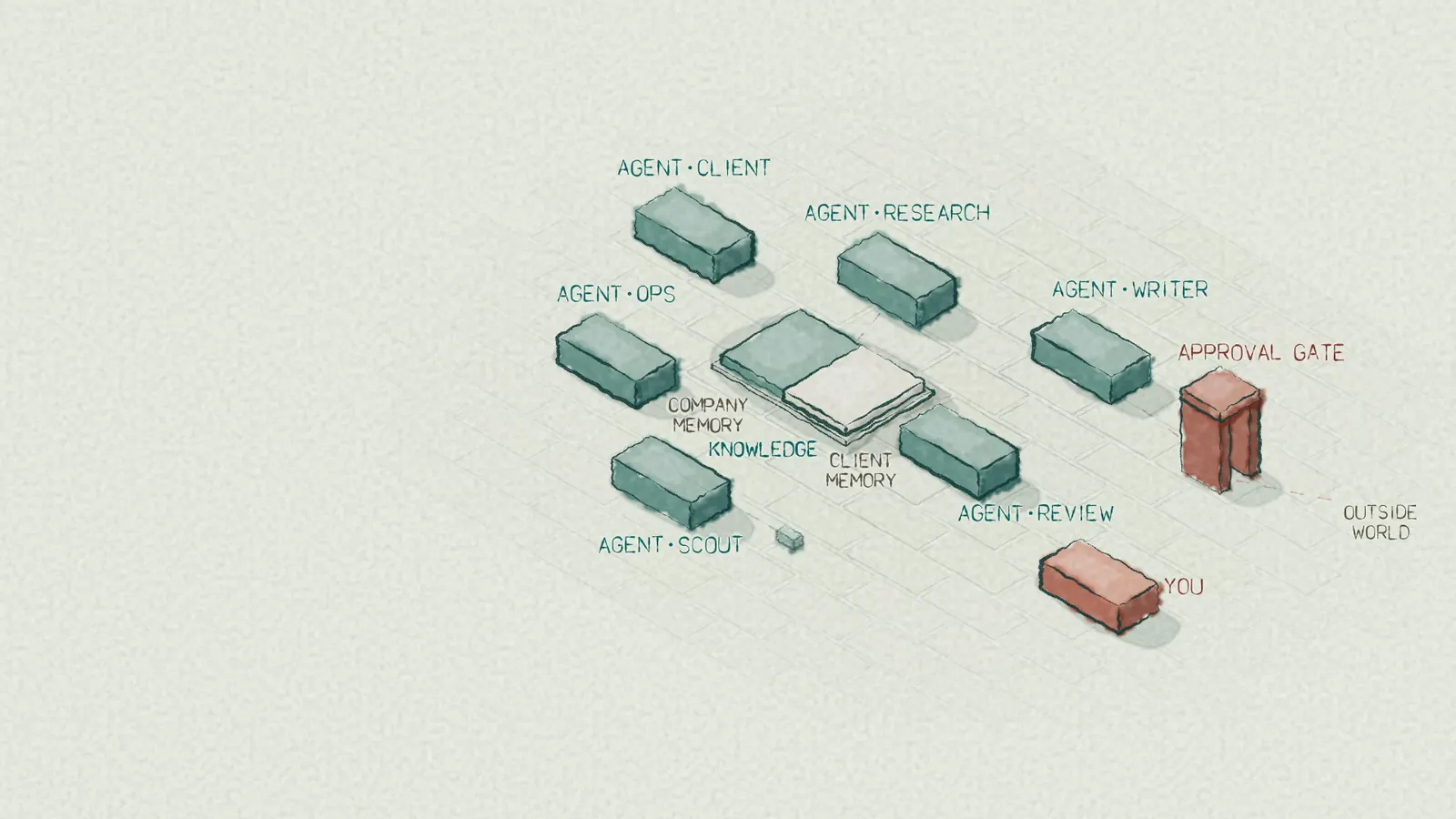
Useful context ends up scattered across chats, files, code, messages and other systems. Even when a model remembers some of it, you still need to know where it came from and whether it has changed since. Knowledge holds documents, collections, research notebooks, search, version history, access rules and deeper recall. Task Board separately holds projects, issues, goals, comments and progress. This keeps what the organisation knows apart from what it is doing.
Seeing something isn’t knowing it
Scribe connects the sources you choose, read-only, puts their records into one format, and works through them in queues it can pause and resume. That material can feed Knowledge, but reading something doesn’t make it trusted company knowledge. Keeping the two apart protects the trail back to the source. A live message, an old message pulled in later, a sorted record and a document added to Knowledge each keep their own history.
It stays when you switch agents
Memory shouldn’t disappear when someone switches desktop app, agent app (Claude Code, Codex and the like), model or chat. The documents and their sources belong to the memory mini app, and the apps around it can be swapped. That is how memory becomes part of a long relationship with your agents rather than a convenience tied to one chat window.